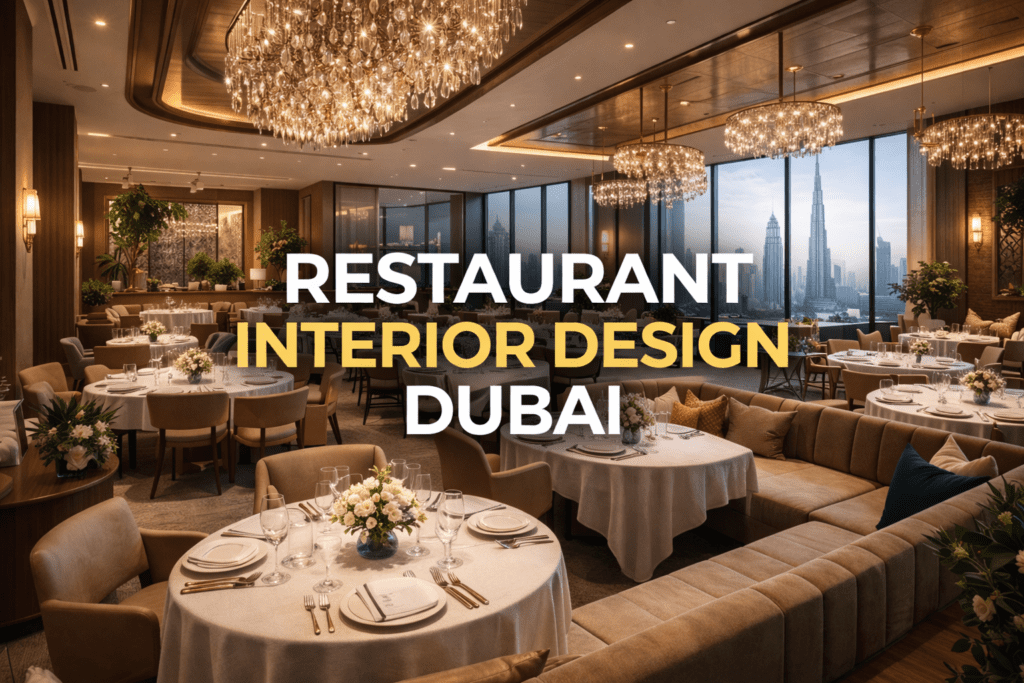
Dubai is one of the most competitive food and beverage markets in the world. New restaurants open every week —” and just as many quietly shut down. While food quality and service matter, restaurant interior design in Dubai often determines whether a concept succeeds or struggles.
In Dubai, interior design is not just about aesthetics. It directly affects customer flow, table turnover, authority approvals, staff efficiency, and long-term profitability. This article breaks down how restaurant interior design really works in Dubai —” from concept to execution —” and what restaurant owners must get right the first time.
Why Restaurant Interior Design Matters More in Dubai Than Anywhere Else
Dubai diners are design-aware, experience-driven, and spoiled with choice. A restaurant’s interior is often the first deciding factor before food is even tasted.
But beyond visuals, Dubai has:
- Strict authority and civil defense requirements
- High rental costs where every square meter matters
- A diverse customer base with global expectations
A poorly planned interior design can lead to:
- Approval delays
- Operational inefficiencies
- Low table turnover
- Increased staff workload
- Reduced customer dwell time or comfort
Good restaurant interior design aligns brand, operations, and compliance into one cohesive environment.
Core Elements of Restaurant Interior Design in Dubai
1. Concept Alignment & Brand Identity
Your interior must clearly communicate your restaurant’s concept within seconds. Whether casual dining, fine dining, café, or cloud-kitchen-adjacent, Dubai customers instantly judge positioning based on space design.
Design elements that reinforce branding:
- Layout and seating density
- Material selection
- Lighting temperature and intensity
- Color palette and textures
A mismatch between food concept and interior confuses customers and weakens brand recall.
2. Layout Planning & Customer Flow
One of the biggest mistakes in restaurant interior design is prioritizing looks over movement.
A strong layout ensures:
- Smooth customer entry and exit
- Logical waiting and seating zones
- Clear circulation for staff
- Efficient kitchen-to-table routes
In Dubai, where rent is premium, layout efficiency directly impacts revenue per square meter.
3. Kitchen Design & Back-of-House Planning
Kitchen design is not optional —” it is heavily regulated in Dubai.
Interior design must account for:
- Exhaust and ventilation systems
- Drainage and grease traps
- Food safety zoning
- Equipment placement and workflow
Failure here often causes approval rejections or costly redesigns. Experienced restaurant interior designers plan front-of-house and back-of-house together, not separately.
4. Authority Approvals & Compliance (Critical in Dubai)
Restaurant interiors in Dubai must comply with:
- Civil defense regulations
- Municipality or free zone requirements
- Landlord and mall guidelines
Interior design drawings are reviewed in detail, especially for:
- Fire exits
- Kitchen layouts
- Materials and finishes
- Electrical and mechanical systems
Designers unfamiliar with Dubai approvals often cause project delays that cost months of rent before opening.
5. Seating Strategy & Revenue Optimization
More seats do not always mean more profit.
Effective restaurant interior design balances:
- Seating comfort
- Table spacing
- Noise control
- Turnover time
The right design increases:
- Average spend per customer
- Repeat visits
- Social media exposure
Poor seating density leads to discomfort, slow service, and negative reviews.
Design Styles Popular in Dubai Restaurants
Dubai is diverse, but several styles dominate successful venues:
- Modern luxury with clean lines and premium materials
- Contemporary minimalism for cafés and casual dining
- Industrial-chic for urban concepts
- Cultural or regional themes executed in a modern way
The key is authentic execution, not copying trends blindly.
Common Restaurant Interior Design Mistakes in Dubai
- Designing without considering approvals
- Overspending on finishes while ignoring operations
- Poor kitchen-to-service flow
- Underestimating storage and prep areas
- Ignoring acoustic treatment
These mistakes often lead to redesigns, delays, and operational frustration after opening.
Interior Design vs Fit Out: Why Coordination Matters
In Dubai, restaurant interior design must be tightly coordinated with the fit out contractor. Beautiful designs that cannot be built within budget or approval constraints cause major issues.
Successful restaurant projects involve:
- Designers who understand construction realities
- Contractors involved early in planning
- Clear coordination between drawings and execution
Design and build alignment saves time, cost, and stress.
How Restaurant Interior Design Affects Long-Term Success
Restaurants that invest in smart interior design benefit from:
- Faster approvals
- Better staff productivity
- Higher customer satisfaction
- Stronger brand recognition
- Better online reviews and visibility
In Dubai’s saturated F&B market, interior design is no longer optional —” it is a strategic business tool.
Final Thoughts: Restaurant Interior Design Dubai Is a Business Decision
Restaurant interior design in Dubai is not just about creating a beautiful space. It is about building an environment that supports operations, compliance, customer psychology, and profitability.
The most successful restaurants treat interior design as part of their business strategy —” not an afterthought.