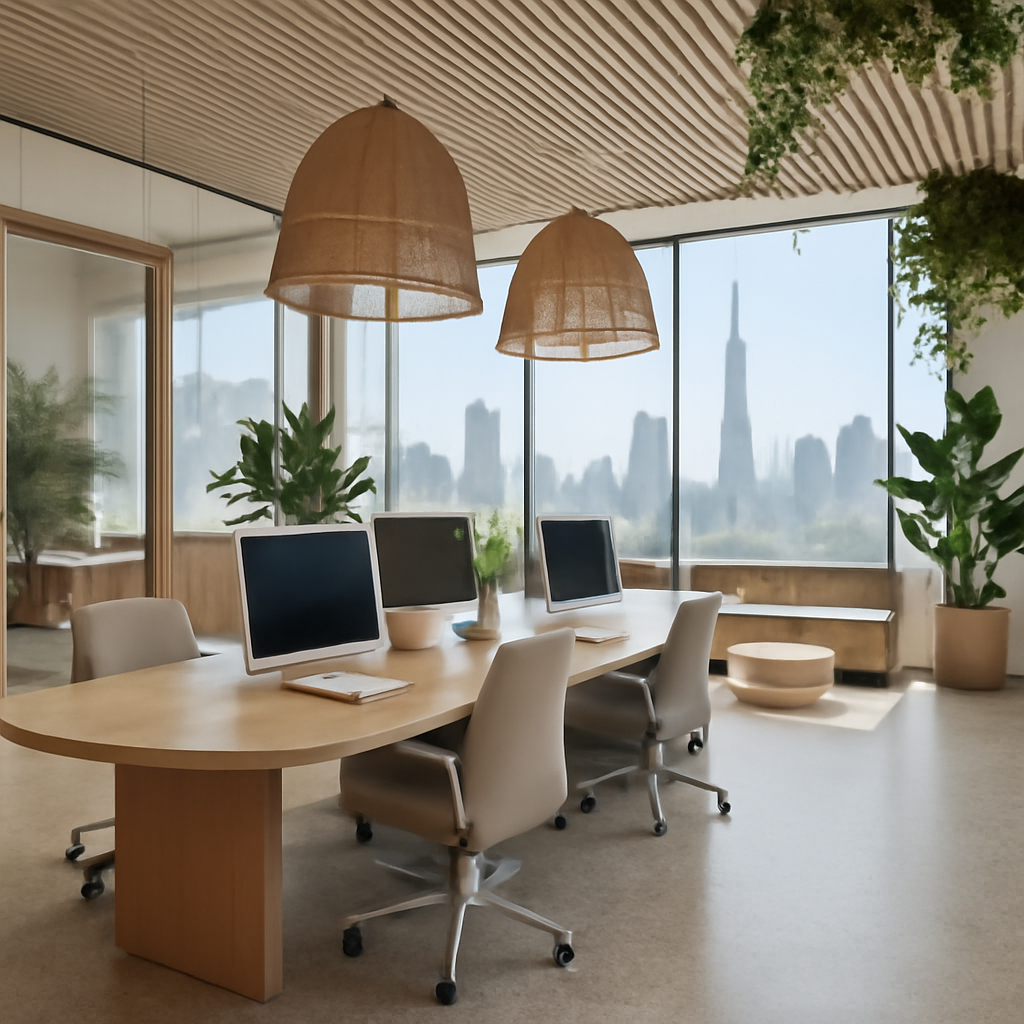
Top Interior Design Trends for Dubai Offices in 2026
Introduction
Dubai’s office landscape is transforming at an unprecedented pace, driven by a workforce that demands flexibility, wellness, and technological integration. As we move through 2026, the city’s commercial interiors are shedding traditional hierarchies in favour of spaces that inspire creativity and foster genuine connection. This article explores the defining design movements reshaping Dubai’s workplaces, from biophilic sanctuaries to AI-enhanced environments, offering practical insights for business owners planning their next office fit-out.
Section 1: Biophilic Design Takes Root in the Desert
Dubai’s extreme climate makes the integration of nature into office interiors not just a luxury but a strategic imperative. In 2026, biophilic design has evolved beyond potted plants and green walls into a holistic approach that mimics natural ecosystems within built environments. Leading offices now feature internal courtyards with native desert flora, living moss installations that improve air quality, and water features that create soothing white noise while humidifying the arid air.
The science behind this trend is compelling: studies consistently show that exposure to natural elements reduces stress hormones by up to 15% and boosts cognitive performance. For Dubai businesses, this translates directly into higher retention rates and reduced absenteeism. Practical implementations include using organic materials like reclaimed timber and natural stone for flooring and furniture, installing circadian lighting systems that shift colour temperature throughout the day, and designing breakout areas that open onto shaded terraces with views of landscaped gardens.
Section 2: Agile Zoning Replaces Fixed Floor Plans
The era of assigned desks and corner offices is definitively over in Dubai’s forward-thinking workplaces. Agile zoning, which gained momentum post-pandemic, has matured into a sophisticated spatial strategy that allocates square footage based on activity rather than hierarchy. In 2026, offices are designed as a series of interconnected zones: quiet focus pods for deep work, collaborative hubs with writable walls and modular seating, social cafes for informal meetings, and recharge rooms equipped with nap pods or meditation cushions.
What distinguishes Dubai’s approach is the cultural adaptation of these zones. Prayer rooms are now standard features, designed with the same aesthetic care as boardrooms, featuring ablution facilities and Qibla direction indicators. Gender-neutral collaboration zones sit alongside privacy-conscious meeting rooms, respecting local sensibilities while embracing global best practices. The key metric for success is utilisation data: smart furniture embedded with sensors helps facility managers understand which zones are underused and which need expansion, allowing for real-time reconfiguration without major renovation costs.
Section 3: Smart Surfaces and AI-Integrated Environments
Dubai’s reputation as a smart city extends into its office interiors, where 2026 marks the mainstream adoption of AI-driven design elements. Smart surfaces—walls and desks embedded with touch-sensitive displays, wireless charging pads, and ambient sensors—are replacing traditional whiteboards and desktop monitors. These surfaces can detect occupancy, adjust lighting and temperature based on individual preferences, and even translate real-time conversations in multilingual teams.
The practical implications for small business owners are significant. AI-powered space management systems can now predict peak usage times and automatically reconfigure meeting room layouts, book desks based on commuting patterns, and optimise energy consumption. Voice-activated controls for blinds, lighting, and AV equipment eliminate the need for complex training, making technology accessible to all employees. Importantly, these systems are designed with data privacy in mind, operating on local servers rather than cloud platforms where sensitive business information could be vulnerable.
Section 4: Wellness-Centric Design as a Retention Tool
In Dubai’s competitive talent market, office design has become a primary differentiator for attracting and retaining skilled professionals. Wellness-centric design in 2026 goes far beyond ergonomic chairs and standing desks. It encompasses acoustic comfort through sound-absorbing panels and white noise systems, air quality monitoring with real-time displays of particulate levels, and thermal comfort zones that allow individual temperature control.
Forward-looking offices are incorporating dedicated fitness studios with shower facilities, nap rooms with blackout curtains and sleep-promoting lighting, and nutritional zones with filtered water stations and healthy snack dispensers. The most innovative designs integrate circadian rhythm lighting that mimics Dubai’s natural daylight patterns, helping regulate sleep-wake cycles for employees who spend long hours indoors. Mental health is also prioritised through quiet gardens on roof terraces and ‘digital detox’ zones where phone use is discouraged, allowing genuine disconnection during breaks.
Key Takeaways
- Biophilic design in Dubai offices now includes native desert plants, water features, and circadian lighting to combat arid climate challenges and improve employee wellbeing
- Agile zoning with cultural adaptations like prayer rooms and gender-neutral spaces is replacing traditional hierarchical floor plans
- AI-powered smart surfaces and occupancy sensors enable real-time space optimisation without major renovation costs
- Wellness features such as fitness studios, nap rooms, and air quality monitoring are essential retention tools in Dubai’s competitive talent market
- Data privacy remains paramount, with smart systems operating on local servers to protect sensitive business information
FAQ
Q: How much does it cost to implement biophilic design in a Dubai office?
A: Costs vary significantly based on scope. A basic green wall installation starts around AED 15,000 for a 10-square-metre feature, while a full biophilic fit-out with integrated water features and circadian lighting can range from AED 50,000 to AED 200,000 depending on office size and complexity.
Q: Do smart surfaces require specialised IT support?
A: Most modern smart surface systems are designed for plug-and-play operation with minimal IT intervention. However, businesses should budget for initial configuration and periodic software updates. Many providers offer managed service agreements that include remote monitoring and troubleshooting.
Q: Can agile zoning work in a small office under 1,000 square feet?
A: Absolutely. Even compact spaces can benefit from agile principles through multi-functional furniture like fold-down desks, mobile partitions, and convertible meeting tables. The key is prioritising flexibility over fixed installations, allowing the same square footage to serve multiple purposes throughout the day.
Conclusion
Dubai’s office interiors in 2026 reflect a city that has learned from global trends while forging its own path. The integration of nature into built environments, the embrace of agile zoning that respects cultural values, and the thoughtful deployment of AI technology all point toward a workplace that prioritises human experience above all else. For business owners, the message is clear: the office is no longer just a place to work—it is a strategic asset that shapes culture, drives performance, and defines your brand. Those who invest in these design principles today will be well-positioned to attract the talent and foster the innovation that will define Dubai’s next chapter of growth.